
An Electric Arc Furnace (EAF) primarily produces steel. It produces high temperatures through an electric arc, melting raw materials such as scrap steel or pig iron to produce high-quality steel. The following is the working principle and operation process of electric arc furnace:
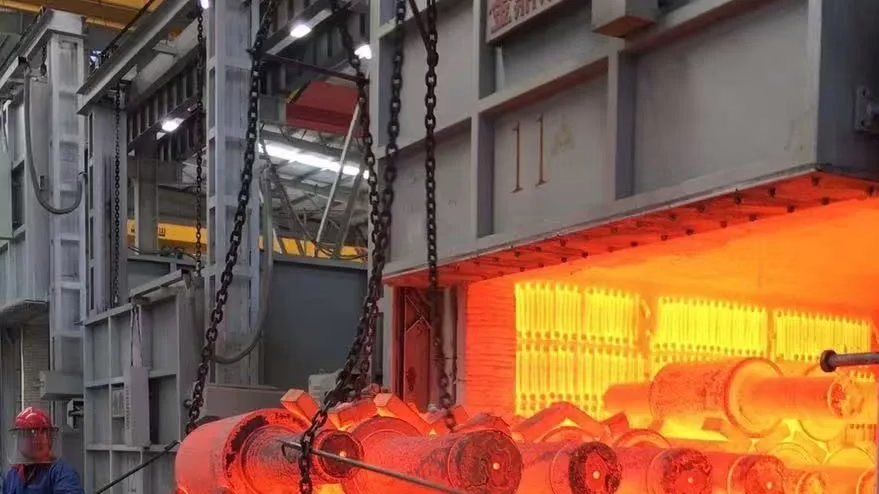
Working principle of electric arc furnace
Electrode discharge: Electric arc furnaces use either three graphite electrodes (in three-phase AC systems) or two electrodes (in single-phase systems). The electrode discharges through an arc to generate high temperature. The current passing through the gas medium forms the arc, which can reach temperatures of more than 3,500 degrees Celsius.
- Molten scrap: Electric arc furnace mainly uses scrap steel as raw material. In the furnace, the high temperature generated by an electric arc quickly melts the scrap steel.
- During the melting process, operators add an appropriate amount of limestone, carbon, silicon, and other deoxidizers and alloying elements to remove impurities and oxygen from the steel, thereby improving its quality.
- In the furnace, operators further refine and desulfurize the molten steel. They achieve this by blowing in oxygen or adding other refining agents to reduce the sulfur content and improve the steel’s purity.
- When the liquid steel reaches the predetermined composition and temperature, open the furnace door or dump the furnace body, pour the liquid steel into the ladle, ready for casting and forming.
The operation flow of electric arc furnace
Loading: The scrap steel is first loaded into the furnace. Scrap steel is usually fed into the furnace by crane or hopper
- Start the arc: Lower the electrode so that it contacts the scrap steel, and then gradually increase the voltage to form an arc. The high temperature of the electric arc begins to melt the scrap.
- Melting process: the furnace gradually melts scrap steel into liquid steel. In this process, the operator will add the appropriate amount of deoxidizer and alloying elements to adjust the composition of the liquid steel.
- Refining process: Refining operations continue to heat and stir the molten steel for desulfurization and removal of other impurities. The quality of the steel can be improved by blowing in oxygen or adding refining agents.
When the liquid steel reaches the desired temperature and composition, it is poured into the ladle. This process is called steelmaking. After steel extraction, the EAF can carry out the next charging and melting cycle.
Advantages of electric arc furnace
- Strong flexibility: Electric arc furnace can flexibly adjust the production plan to adapt to different varieties and specifications of steel production.
- Good environmental protection: Electric arc furnace mainly uses scrap steel as raw material, reducing the demand for iron ore, which is conducive to environmental protection
- Operators can efficiently use energy and reduce consumption by controlling the power and duration of the arc.
Conclusion
It quickly melts scrap steel using the high temperature generated by the arc, and produces high-quality steel after refining and deoxidation processes.With the continuous progress of technology, electric arc furnace will play an increasingly important role in steel production.