
Introduction
Rolls are the core components of rolling mills and bear tremendous pressure during the metal rolling process. The precision of the rolls directly determines the surface quality of the rolled material and the production efficiency of the rolling mill. To maintain the best performance of the rolls, roll grinding has become an indispensable process.
The basic structure of a roll
Rolls are usually composed of three parts:
- Roller body: It comes into direct contact with the rolled piece and determines the shape and surface quality of the rolled material.
- Roll neck: Installed in the bearing, it transmits the rolling force to the frame.
- Roll head: Connected to the coupling, it transmits the rolling torque.
Types and manufacturing methods of rolls
Rolls can be classified into cast rolls and forged rolls according to the forming methods. According to the process method, they are classified into integral rolls, metallurgical composite rolls and combined rolls. Among them, the manufacturing methods of composite rolls include centrifugal lamination, CPC coating, hot isostatic pressing, etc., which can balance hardness and toughness.
Roll grinding and equipment
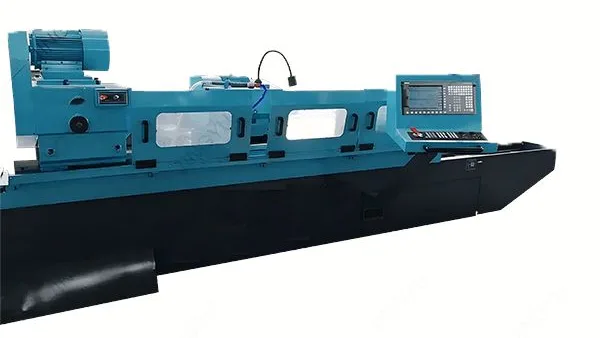
The special equipment for forming rolls is the roll grinding machine. It belongs to a type of cylindrical grinding machine. Common structural forms include:
- Roll mobile grinding machine.
- Grinding wheel frame mobile grinding machine.
The main components of a roll grinding machine include the bed, headstock, tailstock, grinding wheel frame, cooling system, and electrical control system. Through high-precision grinding, the geometry and surface quality of the rolls can be restored.
The precision requirements for roll grinding
In aluminum processing and steel rolling, the precision requirements for roll grinding are extremely strict:
- Radial runout of the roller body: ≤ 0.003mm.
- Diameter difference (taper) at both ends: ≤ 0.015mm (for non-CVC rolls).
- Roller profile accuracy: Error ≤ 10%-20% of the given value; The position offset is ≤5 mm.
- The diameter difference of the paired rollers: Generally ≤ 0.02mm.
Key points for roller management and usage
New roller inspection: After entering the site, staff should measure the dimensions, hardness, and runout, and establish a management card.
Storage conditions: Keep dry, with a temperature above 10℃, and prevent rust.
First use: Operate at low speed and low pressure to avoid damage.
Grinding principle: Select an appropriate grinding wheel, with a feed rate of no more than 0.025mm to prevent burning.
Cooling and lubrication: Ensure uniform cooling of the roller body and roller neck to reduce the risk of neck breakage and spalling.
Usage strategy: New rolls are used for finishing rolling, and old rolls for primary rolling.

Conclusion
Roll grinding is not only an important measure to extend the service life of rolls, but also a core process to ensure the surface quality of rolled materials and the stable production of rolling mills. Steel mills and aluminum plants gain considerable economic benefits as reasonable grinding processes and scientific management reduce roll scrap rates and improve rolling efficiency.
E-mail: cykc@cykcgroup.com.cn